Snow Leopard Tracking in Spiti Valley: Best Time, Locations & What to Expect

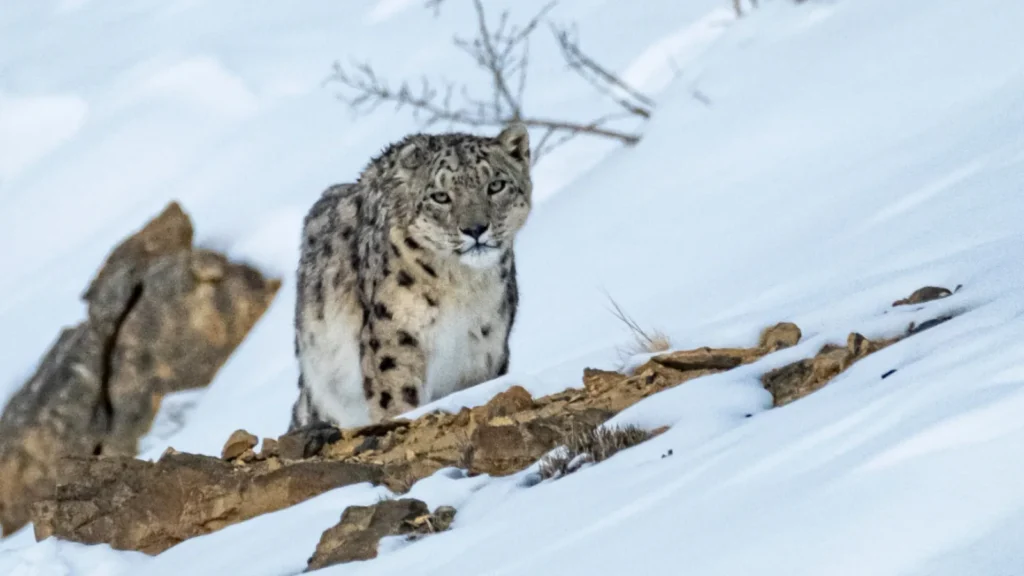
Snow leopard standing on a rocky, snow-covered slope

Table of Contents

A snow leopard may be somewhere on a mountainside and still remain almost impossible to see. Its pale, patterned coat blends into the rocks, and the distances in Spiti Valley make even large animals seem tiny. That is why snow leopard tracking in Spiti Valley is not a typical wildlife safari: it is a patient search through one of the Indian Himalaya’s remarkable high-altitude landscapes.

For a group planning its first expedition, the important questions are practical. When should you travel? Where do you stay? What happens during a tracking day? Which other animals might you observe? And what happens if the snow leopard never appears?

This guide follows the planning and field experience of a typical Spiti winter wildlife journey. It draws on the Mane–Chicham expedition route offered by Unexplored Himachal, but it is not a claim about a particular past group or a guaranteed sighting.

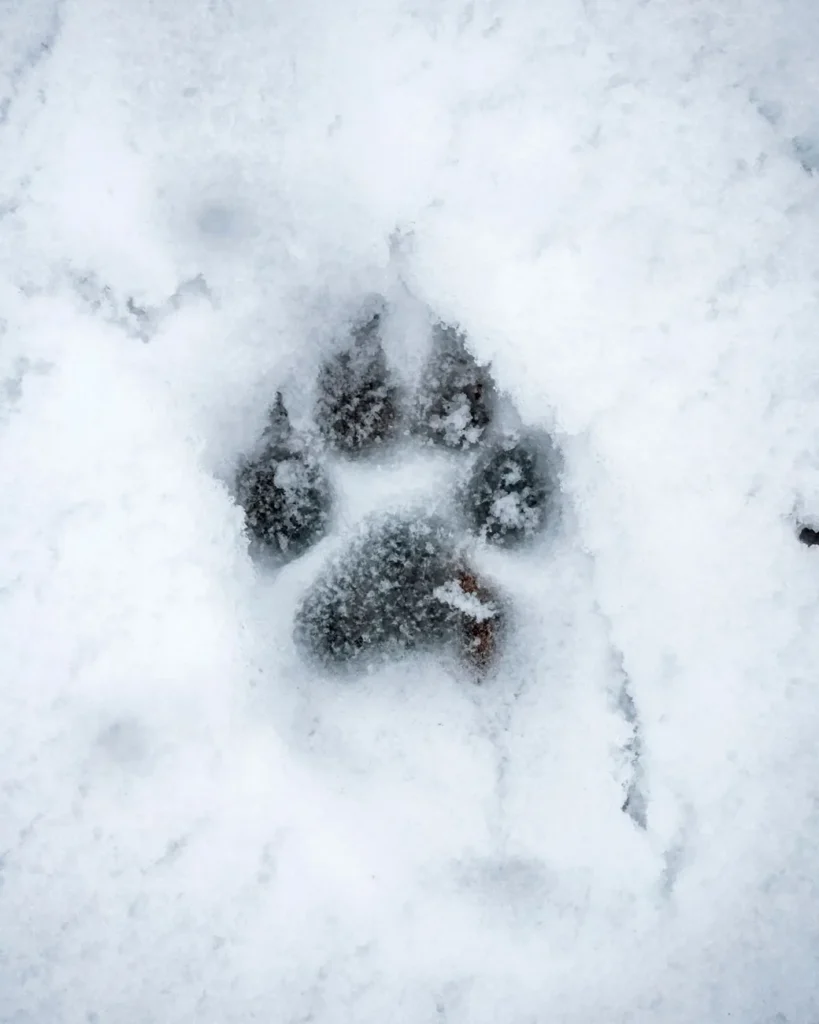
Single animal pawprint pressed into fresh snow.
Tracks can provide clues during wildlife observation, but a print alone does not establish the species.

Why Spiti Valley Is Snow Leopard Country

Snow leopards live across remote mountain ranges in Central and South Asia. In Himachal Pradesh, the high-altitude cold desert of Spiti provides rocky slopes, cliffs, ravines and populations of mountain ungulates on which these cats depend. The Spiti Wildlife Division’s Kibber Wildlife Sanctuary guide identifies snow leopards, bharal (blue sheep), ibex and red foxes among the area’s wildlife.

A snow leopard’s camouflage explains much of its reputation as the “ghost of the mountains.” A visitor may scan a ridge without noticing an animal resting beside a similarly coloured rock. Tracking therefore depends on understanding the habitat rather than simply visiting one famous viewpoint.

Can you see a snow leopard in Spiti? Yes, sightings are possible in this region, particularly during specialist winter tracking trips. But snow leopards are wild animals, and there is no reliable way to promise that a visitor will see one. An ethical expedition should be worthwhile even when the main species stays out of sight.

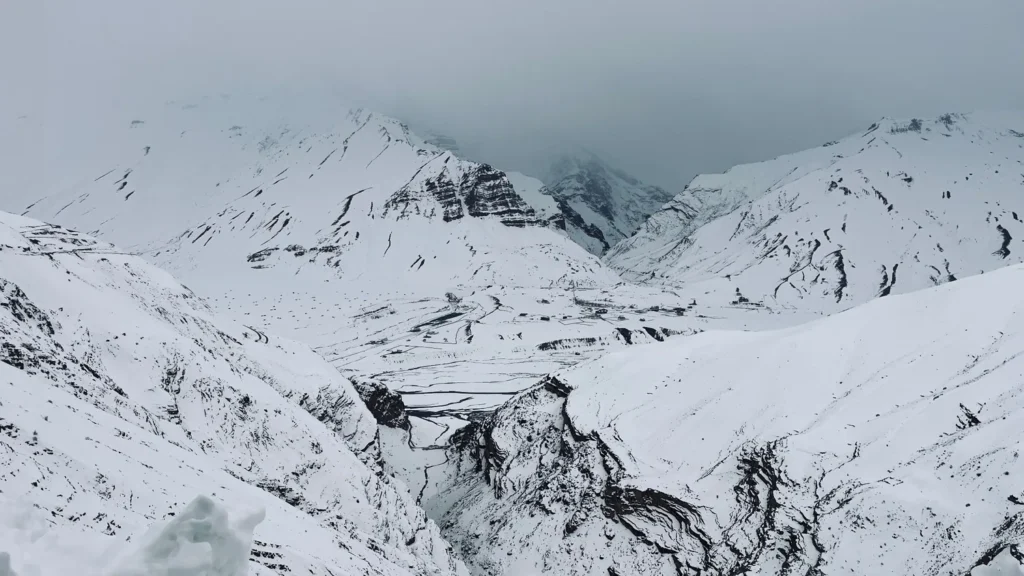
Wide snowy mountain valley beneath an overcast sky.
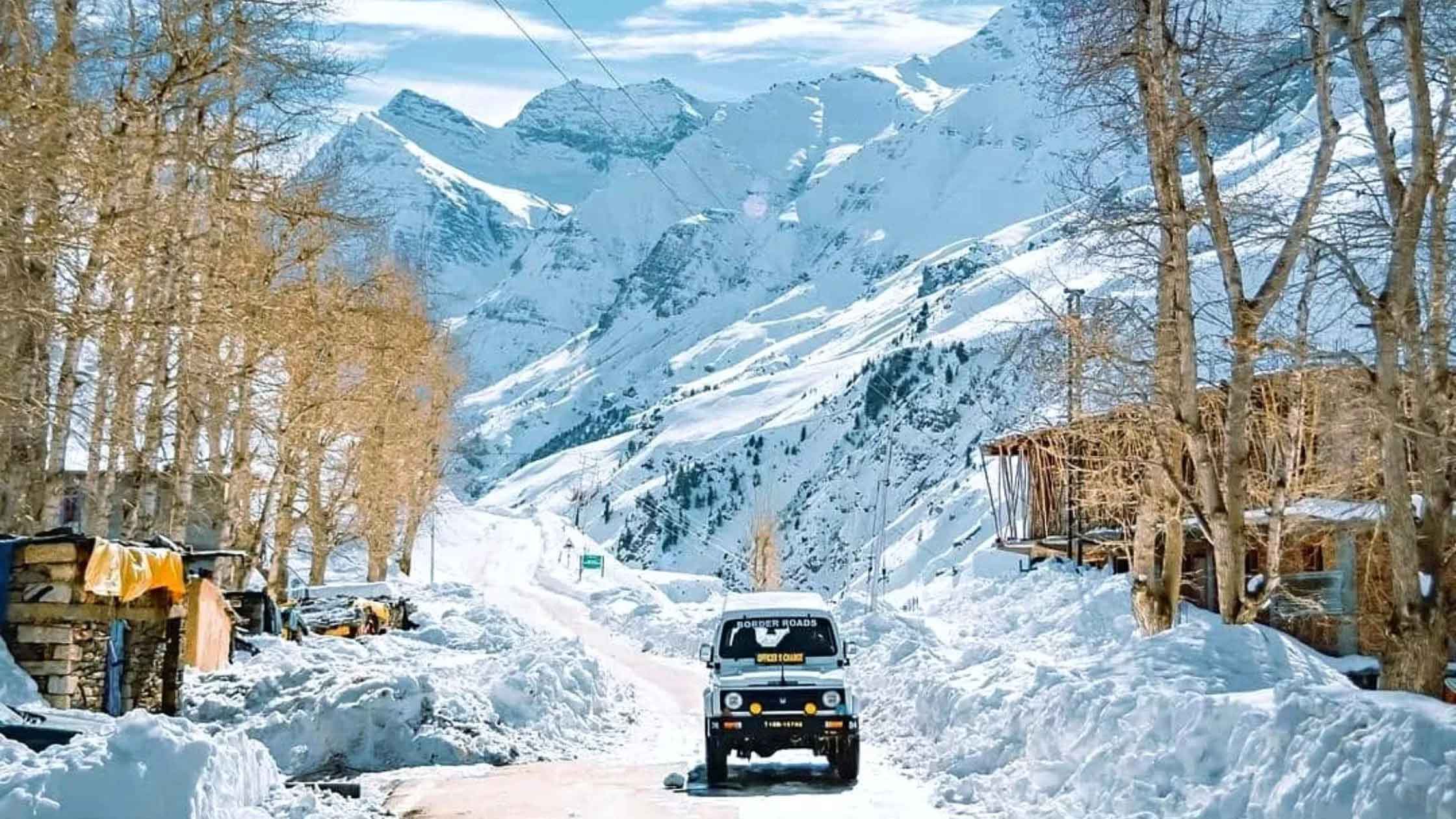
Snow and exposed mountain terrain illustrate the conditions involved in winter wildlife tracking.

When Is the Best Time for Snow Leopard Tracking in Spiti?

January to March is the main period to consider for organised winter snow leopard tracking in Spiti Valley. Winter conditions can make animal signs more noticeable in some places, and trackers can concentrate on suitable observation areas. This does not mean sightings happen on demand or that February is guaranteed to be better than January.

The trade-off is the cold. Snow, wind, short winter days and changing road conditions can affect the expedition. The Spiti Wildlife Division notes that access via the Shimla–Kinnaur side can experience weather-related road closures in winter. Check the official sanctuary information and current local advisories before departure.

For travellers comparing dates, the better question is not “Which week guarantees a snow leopard?” but “Can I allow enough field time, acclimatise carefully and accept changes caused by weather?”

From Chandigarh to Mane and Chicham: How the Journey Develops

A group travelling on Unexplored Himachal’s 11-day, 10-night specialist expedition does not go directly from a low-altitude city to the highest wildlife viewpoints. The planned route starts in Chandigarh, pauses at Thanedar and Kalpa, continues to Mane and Chicham, and returns via Rampur to Chandigarh. This creates a more gradual introduction to the mountains, although the altitude gain still demands care.

Mane: Entering the Cold-Desert Landscape

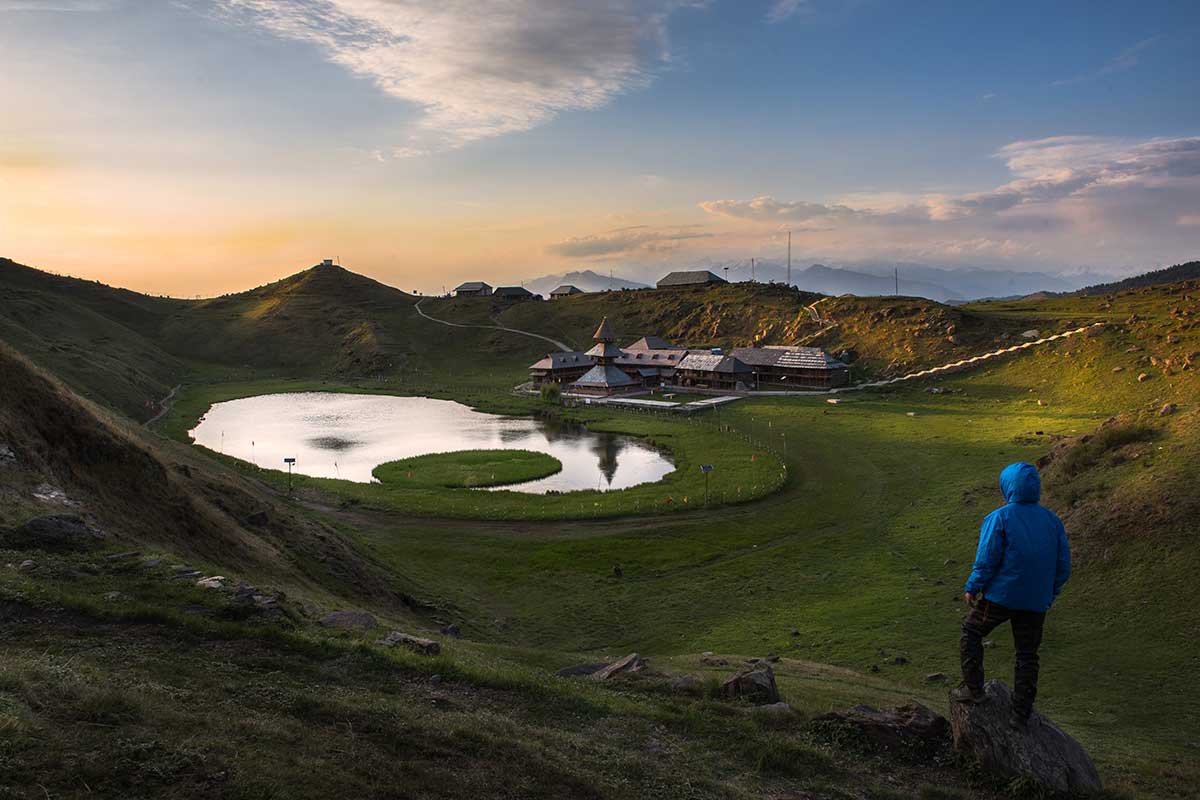
Mane brings the journey into a quieter part of Spiti, surrounded by bare mountains and open valley terrain. On the brochure itinerary, the group reaches its Mane accommodation before heading farther into the higher tracking landscape. This part of the journey helps travellers shift from road travel to the rhythm of an expedition.

Chicham: A Base for Winter Wildlife Observation

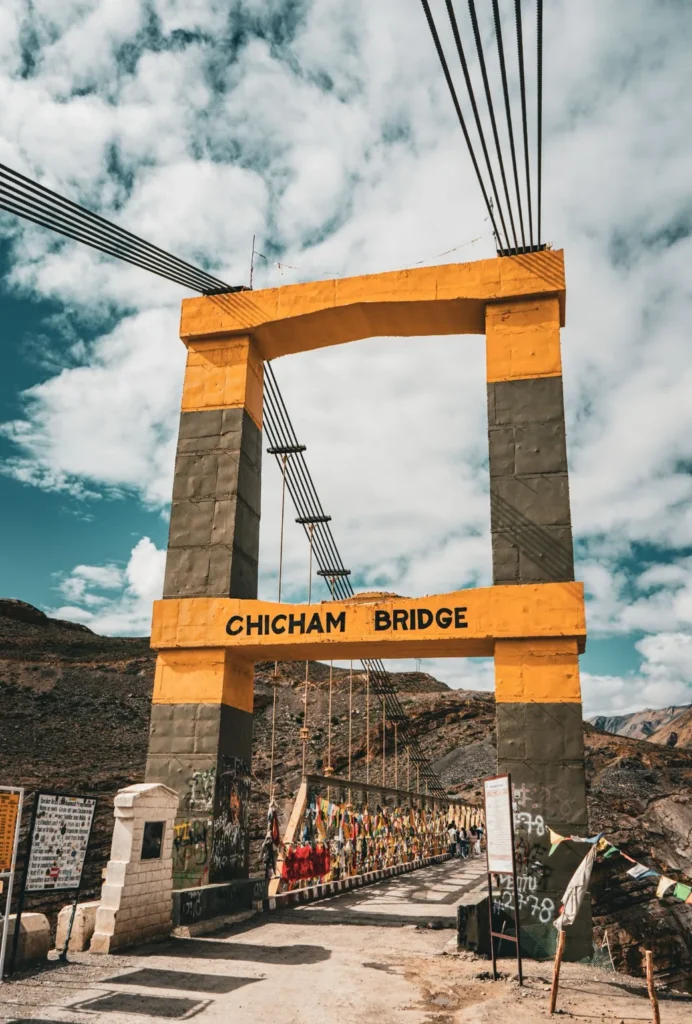
Chicham, near Kibber, places travellers in the wider landscape associated with specialist snow leopard observation. Its dramatic bridge is a memorable landmark, but the real focus is outside the village: slopes, ridgelines, gullies and distant rock faces searched with optical equipment.

The published expedition concept uses Mane and Chicham as separate bases, with dedicated field days rather than a normal sightseeing circuit. Exact accommodation, route access, travel times and day-to-day field plans should always be reconfirmed for a particular departure.

Chicham Bridge entrance and suspension cables in Spiti Valley.
Chicham Bridge is a landmark of the high-altitude landscape around the expedition’s Chicham base.
Village buildings with colourful flags against dry mountain slopes.
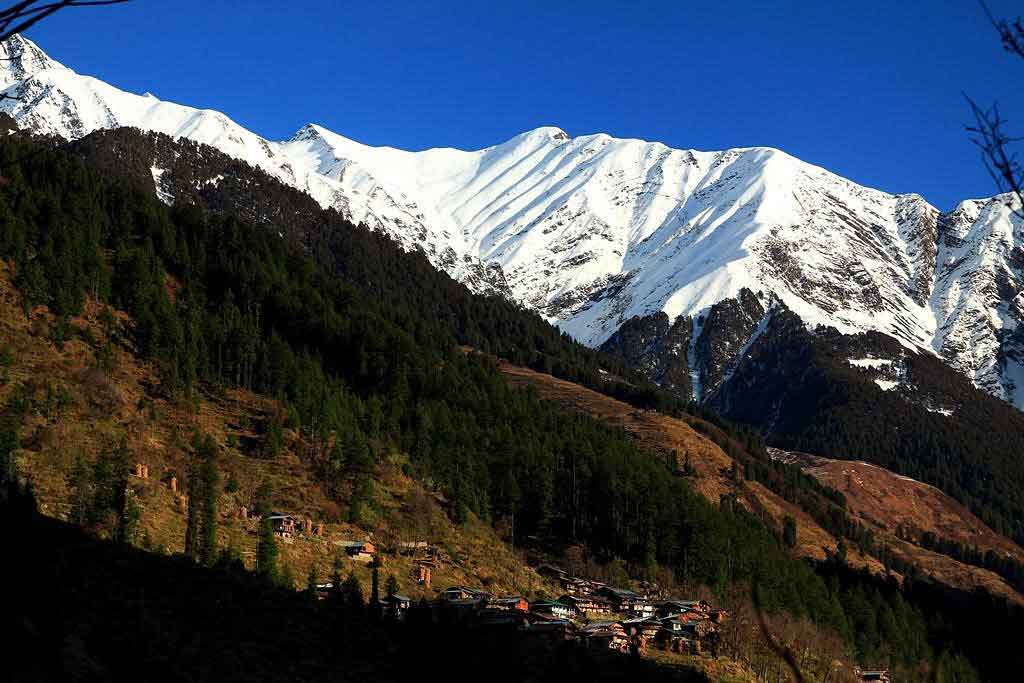
Village architecture offers a glimpse of the human landscape of the trans-Himalayan region.

What Actually Happens on a Snow Leopard Tracking Day?

Imagine the group’s first morning in the field. Rather than driving to a guaranteed sighting point, everyone meets the spotting team, checks the weather and prepares for several hours of observation. Depending on conditions, the day may involve a drive to a vantage point, periods of standing or sitting in the cold, and short walks on uneven ground.

Local trackers scan distant rock faces and slopes using binoculars and spotting scopes. They may pay attention to the movement of blue sheep or ibex, examine possible tracks, or revisit an area where wildlife activity has been reported. A pawprint in snow can be a clue, but a single photograph of a print does not establish which animal made it; interpretation requires local knowledge and context.

Some hours may pass without a large mammal appearing. Then someone notices movement far across the valley: perhaps a herd of bharal on a narrow ledge, a fox travelling over scree, or a raptor soaring on the mountain air. These moments are part of the expedition’s value, not consolation prizes.

A spotting scope may reveal an animal long before it is recognisable to the naked eye. Visitors should be prepared for distant observations, not close encounters. The team’s priority must always be safe, low-disturbance viewing rather than pushing wildlife nearer for photographs.

Planning note: A specialist wildlife expedition involves more waiting and observation than a regular Spiti holiday. If your group enjoys quiet fieldwork and learning from local people, that is a strength of the experience.

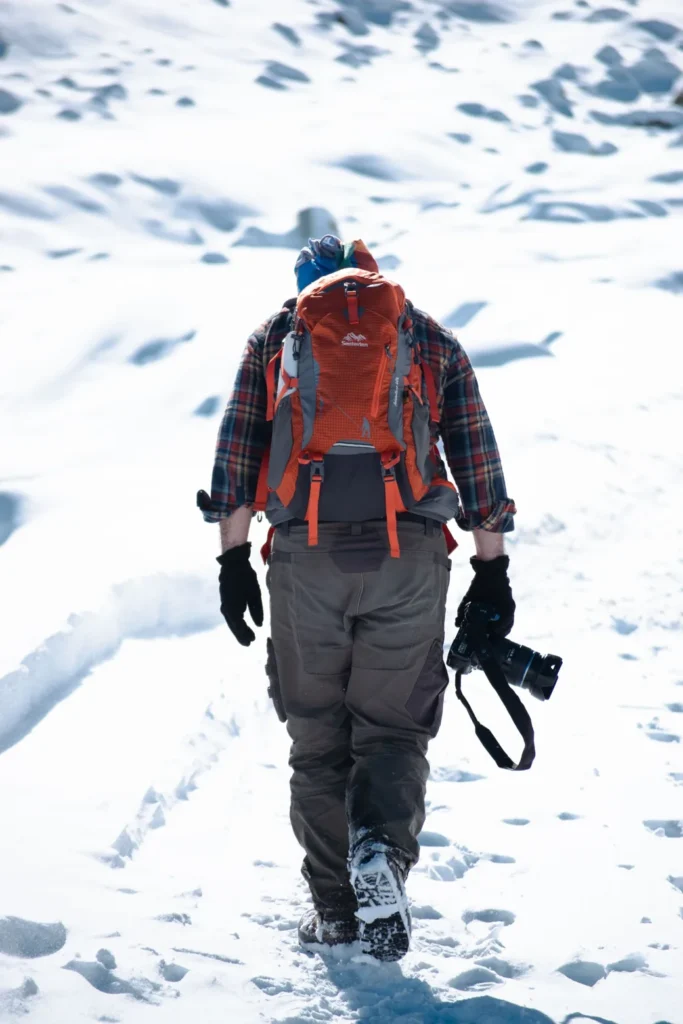
Person carrying a camera across a snow-covered mountain landscape.
An illustrative winter field photograph, not a record of Unexplored Himachal’s expedition.

Beyond the Snow Leopard: The Wildlife That Makes Spiti Special

Understanding the other animals of Spiti makes a snow leopard expedition much richer. The Snow Leopard Trust identifies blue sheep and ibex among the important prey of snow leopards. The Spiti Wildlife Division also lists red foxes, wolves and smaller mammals in the Kibber landscape. None should be described as a guaranteed expedition sighting.

Himalayan Ibex: Life on the Cliffs

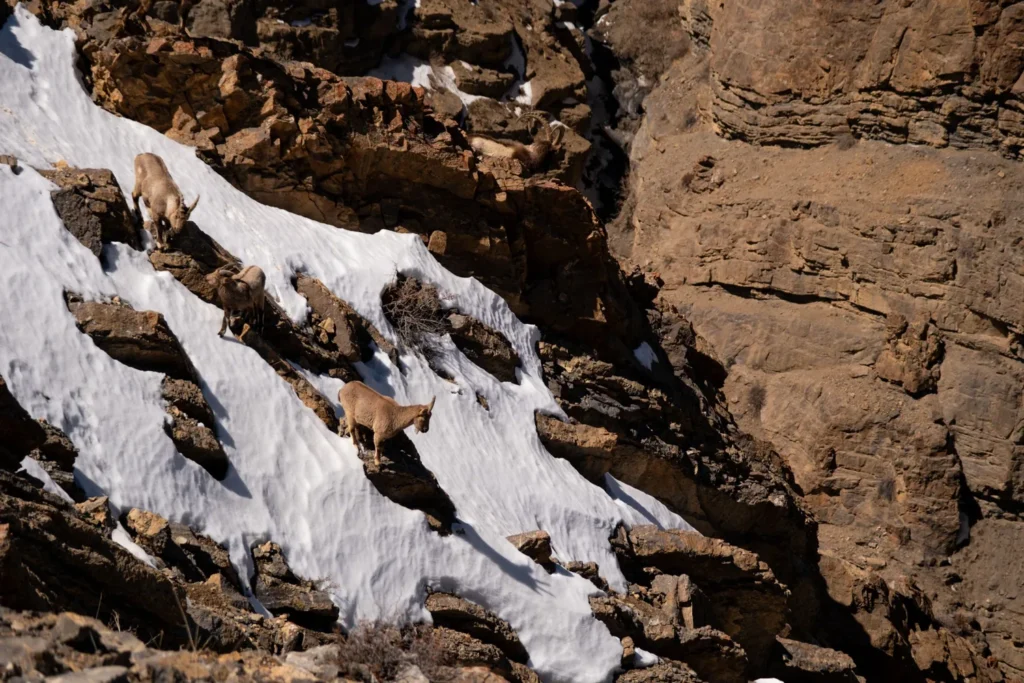
Ibex are wild mountain goats built for steep, exposed terrain. Their ability to move across rocky ledges is extraordinary to watch. Learning to identify ibex at a distance also helps visitors understand how prey animals use this rugged habitat.

Several wild ibex traversing a steep rocky slope with snow patches.
Mountain ibex are among the prey animals associated with snow leopard habitats.

Bharal, Also Called Blue Sheep

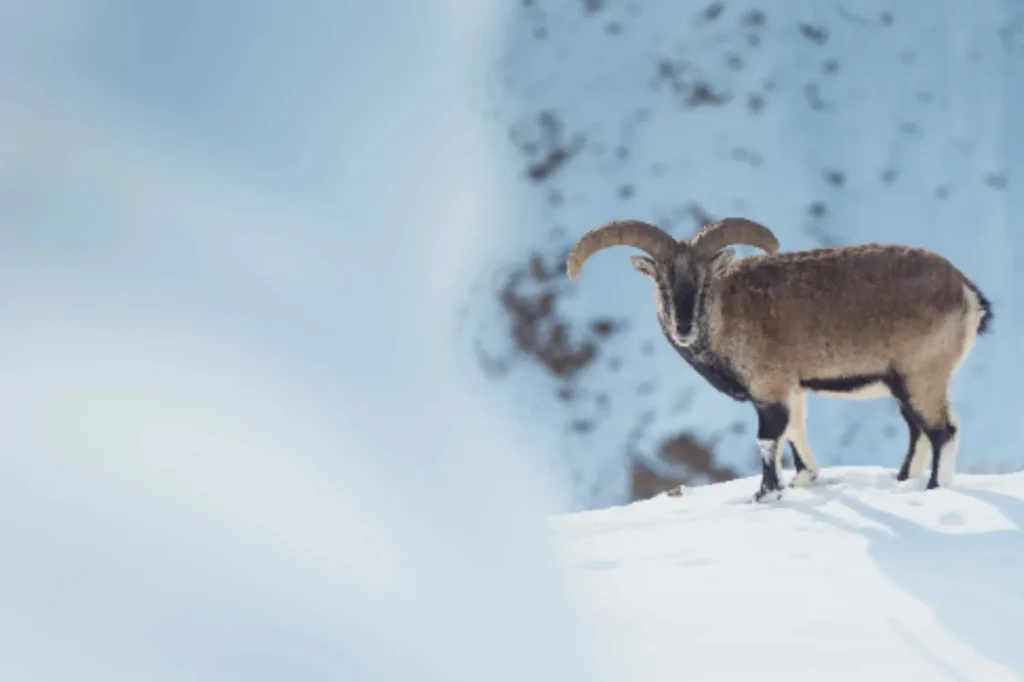
Bharal occupy slopes where their grey-brown colouring blends with the mountains. A group of animals spread across a distant hillside may be difficult to notice until one moves. They are important prey for snow leopards and an interesting wildlife subject in their own right.

Bharal or blue sheep standing on a snow-covered mountainside.
Bharal (blue sheep) are important prey species in high-altitude snow leopard habitat.

Red Foxes and Other Small Predators

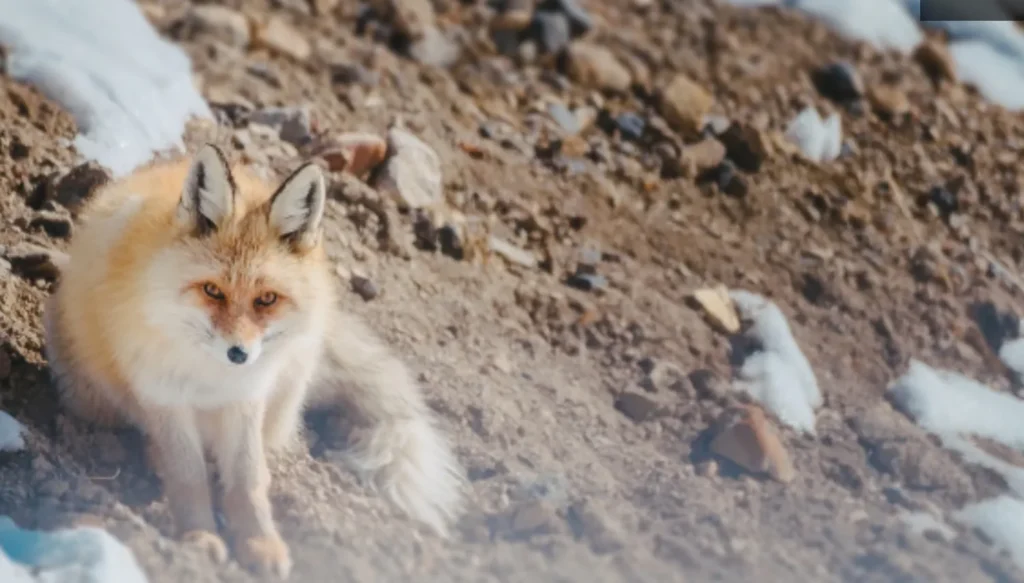
The red fox is another resident of Spiti’s high-altitude ecosystem. Smaller animals can be easier to overlook when everyone is searching the skyline for a big cat, but watching them can reveal just as much about survival in a harsh mountain environment.

Red fox standing among rocks beside patches of snow.
The red fox is another mammal found in Spiti’s wider cold-desert ecosystem.

Birds Above the Valleys

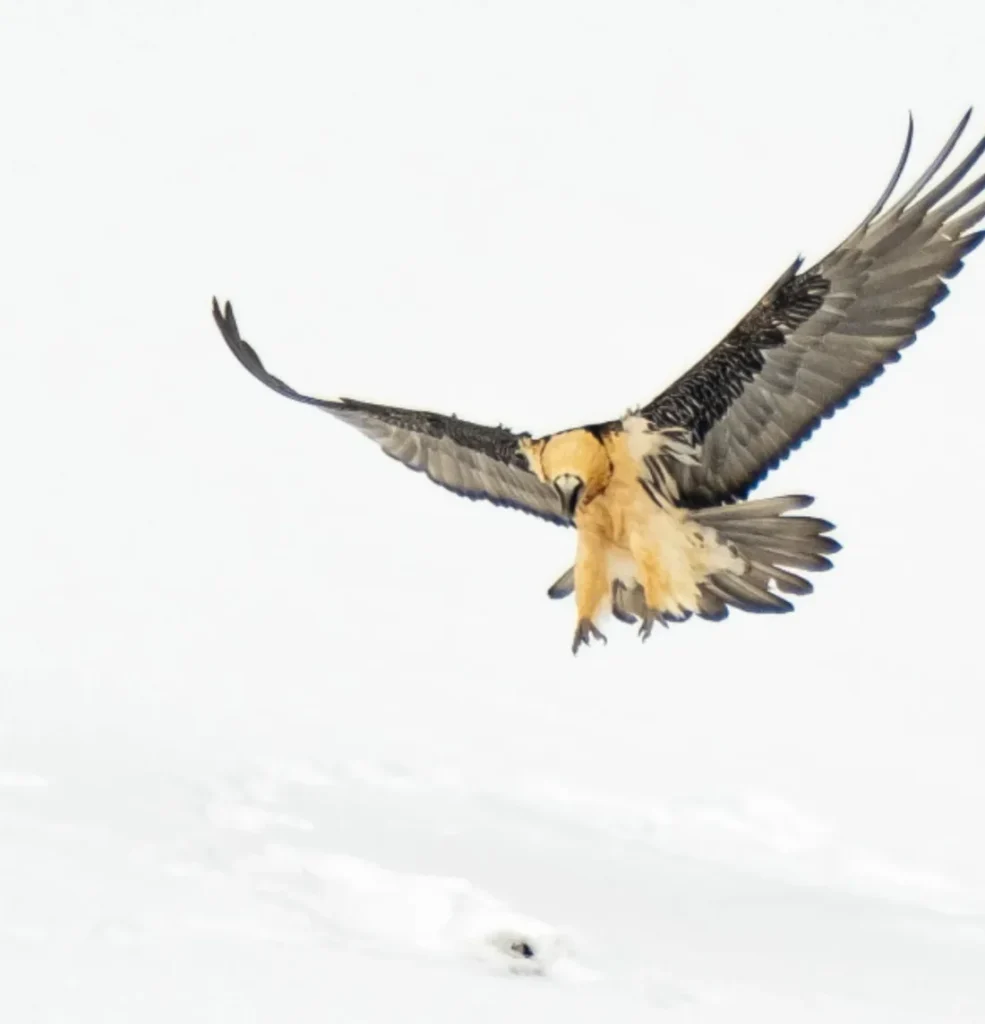
Spiti is also associated with high-altitude birds, including eagles and vultures. A photograph of a bearded vulture can illustrate this broader avian world, provided the image is not presented as an actual sighting from your expedition unless its origin is documented.

The point is simple: a successful wildlife experience is not measured only by whether the snow leopard appears. The wider ecosystem deserves attention too.

Large raptor in flight against a snowy pale mountain background.
Birds of prey are part of the high-altitude wildlife landscape of Spiti.

How Should a First-Time Group Prepare?

Take High Altitude Seriously

Chicham is around 4,200 metres above sea level in the current expedition brochure. At that elevation, travellers can develop altitude illness regardless of their fitness. The CDC’s high-altitude travel guidance emphasises gradual ascent and acclimatisation. Anyone with medical concerns should seek individual advice before booking. Headache, nausea, dizziness or unusual fatigue at altitude should never be dismissed as simply part of the adventure.

Pack for Time Spent Standing Still

A winter wildlife day can feel colder than a normal sightseeing day because people may remain stationary for long periods. Think in layers: thermal base clothing, warm mid-layers, an insulated outer jacket, wind protection, gloves, warm socks, suitable boots, a hat and sunglasses. Carry personal medication and the small items you will want within reach in the field.

Decide What Photography Equipment You Really Need

A camera with a long telephoto lens may be helpful for distant animals, while binoculars are valuable even for non-photographers. A spotting scope is often central to the team’s observation work. Ask the organiser exactly what equipment is included, what must be brought personally and whether tripods or specialist camera support are available.

Be Realistic About Fitness and Comfort

This is not automatically a technical mountaineering trip, but it is not a casual city break either. Cold, uneven ground, high altitude, early starts and potentially long observation sessions can be tiring. Physical demands vary with snow, location and the day’s plan, so check suitability for children, older travellers and anyone with mobility or health limitations directly with the organiser.

Allow Flexibility

Road access, snow conditions and wildlife movements may change the daily schedule. Build reasonable travel buffers, especially around flights or onward connections. A field team can plan carefully, but it cannot control the weather or wild animals.

Why Local Trackers and Responsible Wildlife Tourism Matter

Local expertise is central to making sense of the landscape. Trackers bring experience of the terrain, seasonal patterns and practical observation conditions that visitors cannot gain in a few days. Their work should be treated as expertise, not merely as a way to deliver a trophy photograph.

Conservation also involves communities living alongside wildlife. The Spiti Wildlife Division documents Snow Leopard Eco Development Committees in Chicham and Kibber, established to support participatory wildlife management and community involvement.

For visitors, responsible observation means following local guidance, keeping appropriate distances, avoiding baiting or chasing animals, staying within permitted areas, carrying waste out and respecting village life. The priority is the animal’s welfare and the health of its habitat, even if that means giving up a photograph.

A wildlife expedition is at its best when travellers return with a better understanding of how people, prey species and predators share this cold-desert landscape.

Explore Spiti’s Winter Wildlife with Unexplored Himachal

Unexplored Himachal’s Snow Leopard Expedition in Spiti Valley is designed around a Mane and Chicham wildlife journey, with a planned 11-day Chandigarh-to-Chandigarh itinerary and dedicated wildlife observation days. The expedition is intended for people who value patient tracking, remote mountain environments and the wider Himalayan wildlife experience.

Before booking, ask about the current itinerary, seasonal road conditions, group arrangements, accommodation, guide support, physical demands and availability. No snow leopard sighting is guaranteed.

To discuss the expedition and whether it suits your group, contact Unexplored Himachal on WhatsApp.

Frequently Asked Questions About Snow Leopard Tracking in Spiti

Is seeing a snow leopard in Spiti guaranteed?

No. Snow leopards are wild, elusive animals. Specialist tracking improves the quality of the search, but no ethical operator can guarantee a sighting.

Which months are best for a winter snow leopard expedition?

January to March is the main period typically considered for specialist winter tracking. Conditions vary between seasons and weeks; no individual month offers certainty.

Do I need to be an expert wildlife photographer?

No. Enthusiasts without professional camera equipment can appreciate the landscape, the tracking process and wildlife observed through optical equipment. Confirm what equipment is available on your departure.

Is it necessary to trek long distances every day?

Not necessarily. Wildlife days may involve vehicles, static viewpoints and short walks, but terrain and physical effort depend on field conditions. Ask for the current difficulty expectations before booking.

What else might I see besides a snow leopard?

Spiti supports bharal, ibex, red foxes, wolves and high-altitude birds, among other species. Actual observations depend on luck, conditions and the locations visited.

How many days should I allow?

A meaningful expedition needs time for travel, acclimatisation and repeated field observation. Unexplored Himachal’s current Mane–Chicham expedition plan runs for 11 days, including travel from and back to Chandigarh.

Picture of About Author<br><br><b>Unexplored Himachal</b>
About Author

Unexplored Himachal

Unexplored Himachal is a local tour operator based in the heart of Himachal Pradesh. Our passion for travel and deep-rooted love for our homeland drive us to introduce travelers to the hidden valleys, quaint villages, and untouched landscapes that often go unnoticed.

Best Destination Packages

Recent Adventure Tour

Best Motor Bike Tour

Scroll to Top

Request for tour plan

See our Privacy Policy for how we use and protect your information.