Manali Tirthan Valley Package
Book Now 5 Nights, 6 Days Location: Kullu & Manali
Home » Kullu Dussehra 2026
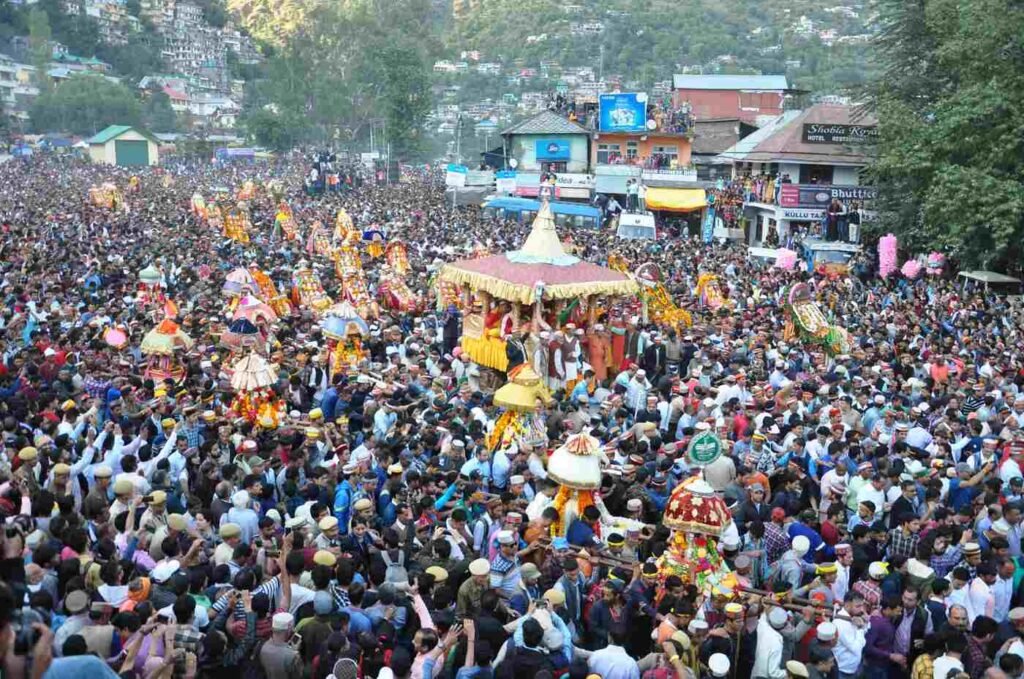
Across much of India, Dussehra marks the conclusion of celebrations honouring the victory of good over evil. In Himachal Pradesh’s Kullu Valley, however, it marks the beginning of something remarkable.
The sound of traditional drums carries across Dhalpur. Village deities arrive in elaborately decorated palanquins, accompanied by musicians, priests and generations of devoted followers. At the centre of the gathering stands Lord Raghunath, the presiding deity of the former Kullu kingdom.
This is International Kullu Dussehra, a seven-day celebration where centuries-old religious traditions continue alongside folk performances, cultural exchange and a vibrant public fair.
International Kullu Dussehra 2026 will take place from 21 to 27 October at the historic Dhalpur Maidan in Kullu, Himachal Pradesh. According to the district administration, the festival will feature Lord Raghunath’s Rath Yatra, a congregation of more than 250 hill deities, traditional Nati performances and international cultural showcases.
Yet Kullu Dussehra is far more than a festival to watch. Its history tells the story of a kingdom, its ceremonies reveal the valley’s relationship with its village gods and goddesses, and its international identity shows how a deeply local tradition has reached a wider audience.
Whether you are interested in Himachal’s history, travelling to Kullu for the first time or wondering why Dussehra is celebrated so differently here, this guide explores the stories, customs and practical details that make the festival worth understanding.
To understand Kullu Dussehra, we must travel back to the seventeenth century, when Kullu was a Himalayan kingdom ruled by Raja Jagat Singh.
The story begins not with a battle or a victory procession, but with a king seeking redemption.
Raja Jagat Singh ruled Kullu between 1637 and 1672. According to the district’s historical account, an important turning point in his reign was the arrival of an idol of Lord Raghunath from Ayodhya.
Local religious traditions connect this event with a curse placed upon the king by a Brahmin.
In widely told versions of the legend, the king was overcome by guilt following an injustice involving the Brahmin. Seeking relief from his suffering, he was advised to bring an idol of Lord Rama from Ayodhya and dedicate his kingdom to the deity.
The idol was brought to Kullu, and Raja Jagat Singh placed Lord Raghunath upon the royal throne. The king thereafter regarded himself as the deity’s first servant rather than the ultimate ruler.
The supernatural elements of this story belong to the region’s religious tradition. The historical importance of Lord Raghunath’s installation, however, is also recognised in the Kullu District Administration’s historical account.
Before Lord Raghunath’s installation, Kullu already had a rich religious landscape shaped by Shaiva, Shakta and village-deity traditions.
The arrival of Lord Raghunath did not erase those local beliefs. Instead, it introduced a central royal deity around whom a much wider network of regional gods and goddesses could gather.
The kings of Kullu subsequently ruled in the name of Lord Raghunath, and the ceremonial relationship between the royal household and the deity became part of the valley’s religious identity.
Over time, Dussehra developed into an annual gathering that brought the kingdom’s different communities and their deities together.
The historic Raghunath Temple in Sultanpur remains an important place of worship and an essential part of this story.
For visitors interested in its architectural and religious significance, our separate guide to Raghunath Temple in Kullu offers further background.
What makes this history particularly fascinating is that its ceremonial legacy has survived changes in political rule. The former kingdom no longer governs Kullu, yet its religious traditions remain visible in the annual celebrations at Dhalpur.
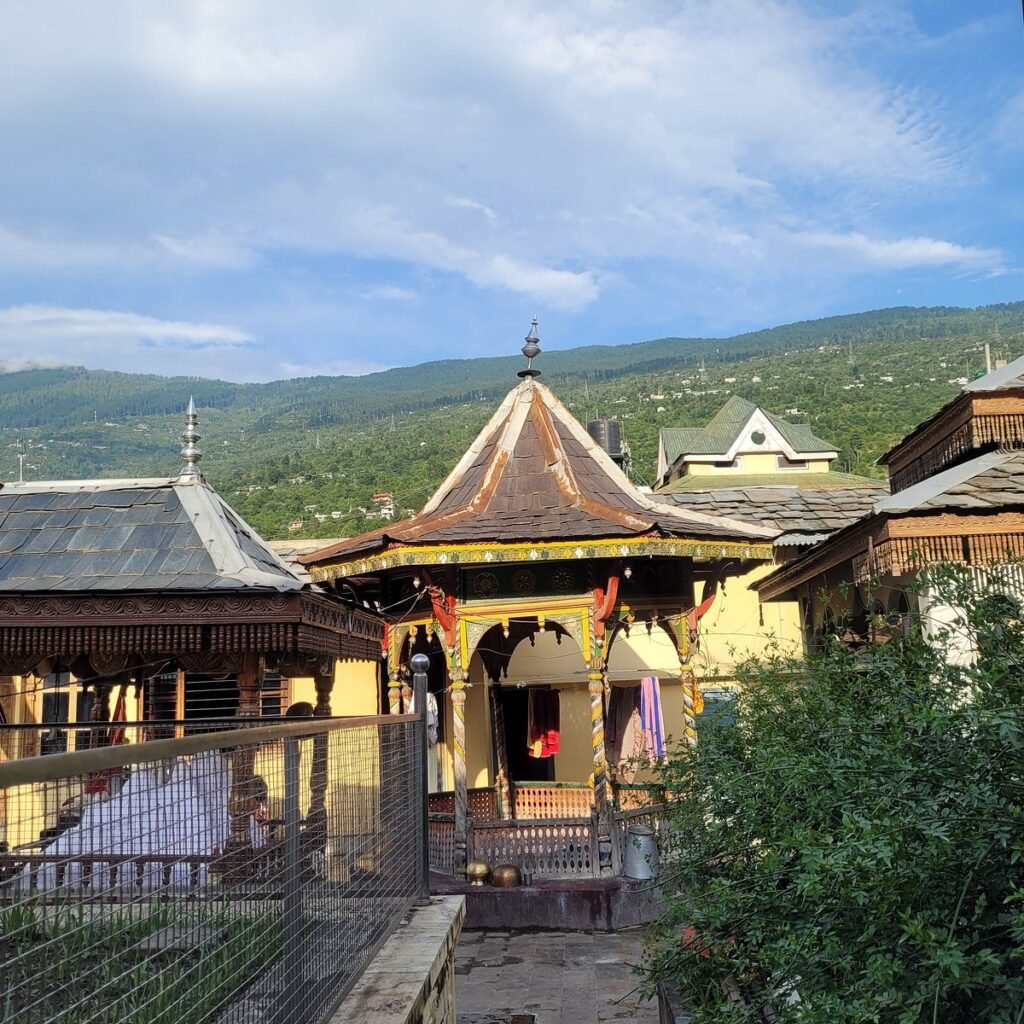
In many places, a temple is primarily understood as a building where a deity is worshipped.
In Kullu Valley, the relationship between communities and their local deities extends far beyond the temple walls.
Villages have their own gods and goddesses, with traditions involving festivals, sacred journeys, community decisions and relationships with neighbouring deities.
This distinctive religious culture is often called Dev Sanskriti, or Devta culture.
During Dussehra, deities from different parts of Kullu district travel to Dhalpur to participate in the religious gathering centred on Lord Raghunath.
These journeys involve much more than transporting ceremonial objects.
A deity may be accompanied by its priest, musicians, traditional attendants, a kardar responsible for managing the deity’s affairs, and members of the village community.
Some participants undertake journeys from distant valleys, following customary routes and practices passed down through generations.
For the communities involved, the visit is an act of faith and a continuation of relationships that connect villages across the mountains.
The gathering also reflects a historically important idea: different local religious identities coming together without losing their individual traditions.
Two terms help visitors understand what they are seeing.
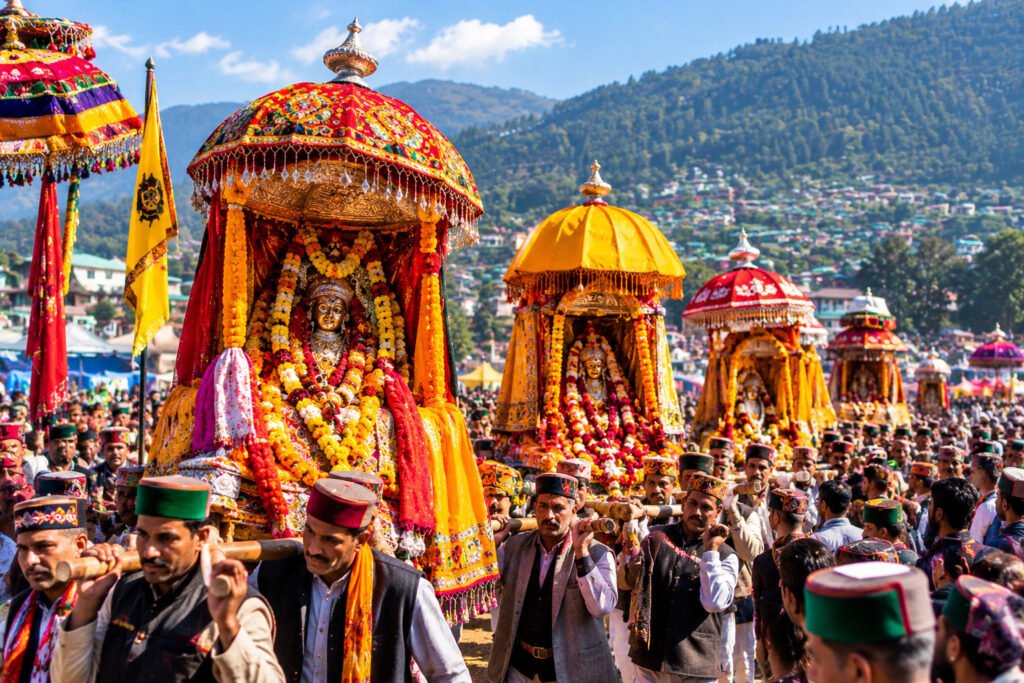
A rath in Kullu’s Devta traditions may refer to a ceremonial structure or palanquin in which a deity is represented and carried. These structures take different forms, ranging from decorated wooden frameworks to more elaborate arrangements with colourful cloth and ornaments.
A mohra is a sacred metal representation, often depicting a face or bust associated with a deity. Mohras may be made using different metals and are treated as consecrated religious objects rather than ordinary decorations.
The official Kullu Dussehra resource on Raths and Mohras describes their importance within the valley’s living religious traditions.
Visitors may notice that palanquins move rhythmically with the music or that attendants participate in elaborate meetings between deities.
These movements and encounters have specific cultural and religious meanings. They should not simply be understood as performances staged for tourists.
Kullu Dussehra helps sustain traditions that are otherwise dispersed across individual villages.
The artisans who make ceremonial objects, musicians who preserve traditional rhythms, priests who conduct rituals and communities that maintain their temples all contribute to the festival.
For an outsider, the gathering is visually extraordinary.
For the people of Kullu, it is also an expression of belonging, responsibility and a continuing relationship with their deities.
Kullu Dussehra is not a single procession followed by a week of entertainment.
It is a sequence of religious gatherings and ceremonies, with each stage carrying meaning for the participating deities and communities.
At the centre of these celebrations is Lord Raghunath’s Rath Yatra.
In the lead-up to the main celebrations, deities begin arriving from different parts of the valley.
Their colourful palanquins are accompanied by traditional instruments, ceremonial attendants and followers.
The deities are received according to their individual customs and take their places in the festival area.
The arrival of Hidimba Devi, associated with the Manali region and the former Kullu royal family, has particular importance in the ceremonial tradition.
Unlike ordinary festival guests, these deities are understood by devotees to be participating in a sacred gathering.
The opening procession is the festival’s defining public ceremony.
According to the official account of the Rath procession, the celebrations involve carefully observed rituals connecting Lord Raghunath’s temple, the former royal household and the assembled deities.
A decorated horse associated with Narsingh forms part of the traditional procession. Deity palanquins, musicians, priests and members of the former royal family also have established ceremonial roles.
The images of Lord Rama and Sita are brought to the decorated wooden chariot at Dhalpur.
Following the prescribed prayers and circumambulations, devotees pull the chariot with ropes amid religious chants and traditional music.
The moment is visually impressive, but its importance lies in the faith and history it represents.
The chariot journey symbolically brings Lord Raghunath into the festival gathering, where the ceremonies continue over the following days.
Throughout the festival, Dhalpur becomes a meeting place for the participating deities.
Devotees visit the ceremonial camps, village groups maintain their traditions and the sounds of drums and other folk instruments form part of the religious atmosphere.
Alongside these ceremonies, visitors can experience the public fair, cultural programmes and the everyday activity of Kullu town during its most significant annual gathering.
The final day includes a ceremony known as Lanka Dahan, symbolically associated with the destruction of Ravana’s Lanka in the Ramayana tradition.
Instead of the familiar burning of large Ravana effigies seen in many North Indian towns, Kullu’s closing ritual traditionally involves the symbolic burning of vegetation near the Beas River.
The concluding ceremonies are followed by the departure of Lord Raghunath and the participating deities from the festival gathering.
For the communities that have travelled to Dhalpur, the end of the festival also begins the journey home.
The ceremonies thus form a complete cycle: arrival, assembly, worship, celebration and farewell.
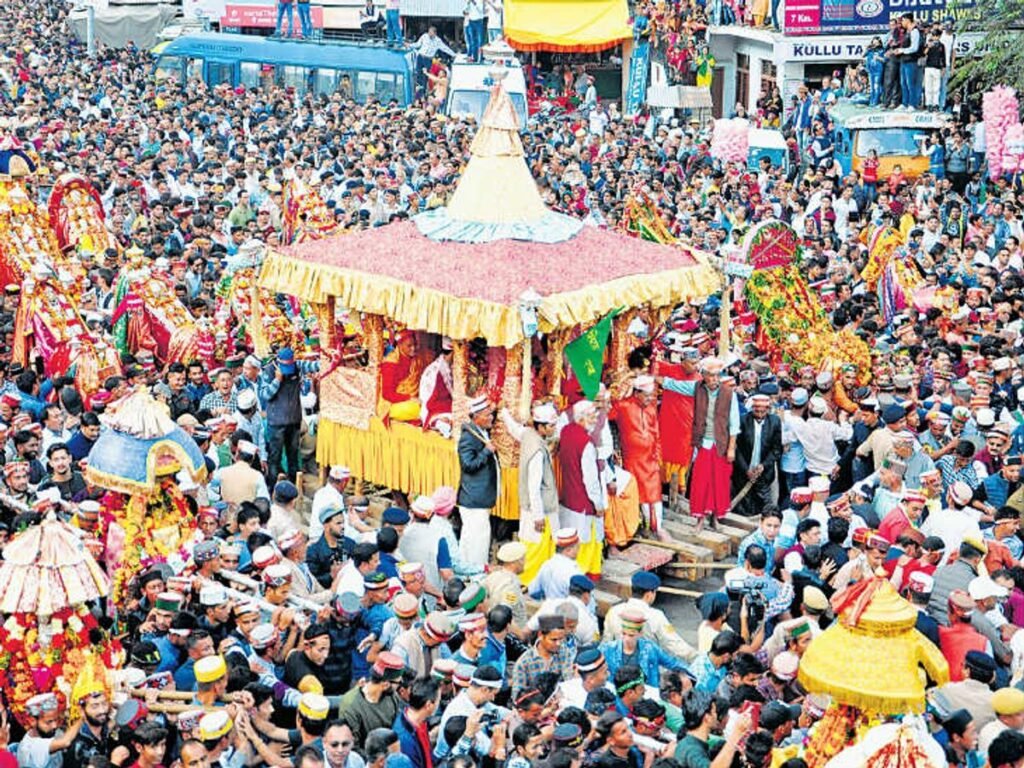
Dussehra is celebrated in different forms across India, drawing on the stories of Lord Rama, Goddess Durga and regional religious traditions.
While many celebrations share the larger theme of the victory of good over evil, their ceremonies, historical backgrounds and local meanings can differ considerably.
Kullu Dussehra stands apart because of its central role for Lord Raghunath, its gathering of village deities and its distinctive week-long ceremonial tradition.
In cities such as Delhi and many other parts of North India, Dussehra is closely associated with Ramlila performances and the symbolic burning of effigies of Ravana, Meghnad and Kumbhakarna.
The celebrations commonly culminate around Vijayadashami.
Kullu follows a different pattern. Its central public ceremony is Lord Raghunath’s Rath Yatra, and the festival continues for seven days.
The symbolic conclusion is Lanka Dahan rather than the conventional Ravana-effigy burning.
Mysuru Dasara in Karnataka is another major Indian festival with a strong connection to royal history.
Its traditions centre on Goddess Chamundeshwari, with elaborate celebrations associated with Mysuru Palace, cultural programmes and the famous ceremonial procession known as the Jamboo Savari.
While both Mysuru and Kullu preserve royal religious traditions, their ceremonial identities are distinct.
Mysuru is closely associated with the Goddess and the royal procession, whereas Kullu’s festival brings village deities together around Lord Raghunath.
Bastar Dussehra in Chhattisgarh offers an important comparison because it challenges a common misconception: Kullu is not the only Indian Dussehra celebration without Ravana-effigy burning.
Bastar’s festival is traditionally associated with Goddess Danteshwari and the region’s tribal and religious heritage. Its ceremonial cycle extends for approximately 75 days.
Like Kullu, Bastar preserves a distinctive relationship between religious tradition, local communities and historical royal institutions.
The comparison reveals something important about India’s cultural diversity.
Dussehra does not have one universal form, and each region’s ceremonies deserve to be understood within their own traditions.
In West Bengal, Vijayadashami is closely connected with the conclusion of Durga Puja.
Devotees bid farewell to Goddess Durga, and idol immersion ceremonies form a significant part of the celebrations.
The emotional and religious focus is therefore different from Kullu’s assembly of village deities.
Kullu’s distinctiveness is not based on one ritual alone.
It is the combination of a seventeenth-century royal history, devotion to Lord Raghunath, living village-deity institutions, a week of ceremonial gatherings and the participation of communities from across the Himalayan valleys.
These traditions have continued long after the political kingdom itself disappeared.
That continuity is what makes Kullu Dussehra more than a regional variation of a familiar festival.
Kullu Dussehra’s international identity is relatively recent compared with its centuries-old religious history.
According to the official festival website, Kullu Dussehra was declared an international festival in 1972.
This recognition marked an important stage in the development of its public cultural programme.
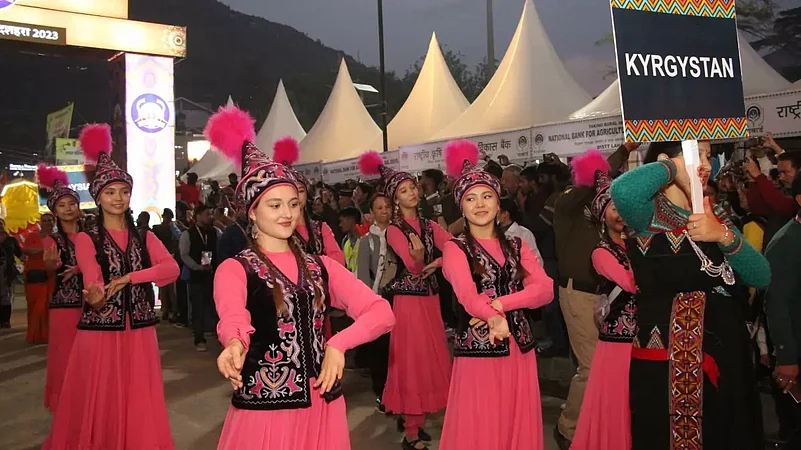
The festival gradually became a platform where local Himachali traditions could be presented alongside folk performances from other regions of India and participating countries.
One of the most visible expressions of this cultural exchange is the International Folk Dance Festival.
Traditionally associated with the Lal Chand Prarthi Kala Kendra in Kullu, the event has provided space for Indian and overseas cultural troupes to share their music, costumes and dance traditions.
The programme introduces visitors to a wider range of performances while also creating opportunities to showcase Himachal’s folk heritage.
However, international participation can change from year to year. The presence of foreign artists should never be assumed without checking that year’s official announcements.
The appeal of Kullu Dussehra is not simply that international artists perform there.
Visitors from outside Himachal encounter a religious tradition that remains closely connected to village life.
The ceremonial palanquins, distinctive instruments, community participation and historic relationship between the former royal family and Lord Raghunath reveal a cultural landscape different from that found in many better-known Indian festivals.
The celebration brings together two experiences: observing the living traditions of Kullu and participating in a wider cultural gathering.
An international festival must balance increased public attention with respect for its original purpose.
For Kullu, that means the Rath Yatra and the participating village deities remain central, even as the festival includes exhibitions, stage performances and visitors from farther afield.
Understanding this distinction matters.
Kullu Dussehra is internationally recognised, but its spiritual meaning comes from the communities that have maintained its traditions for generations.
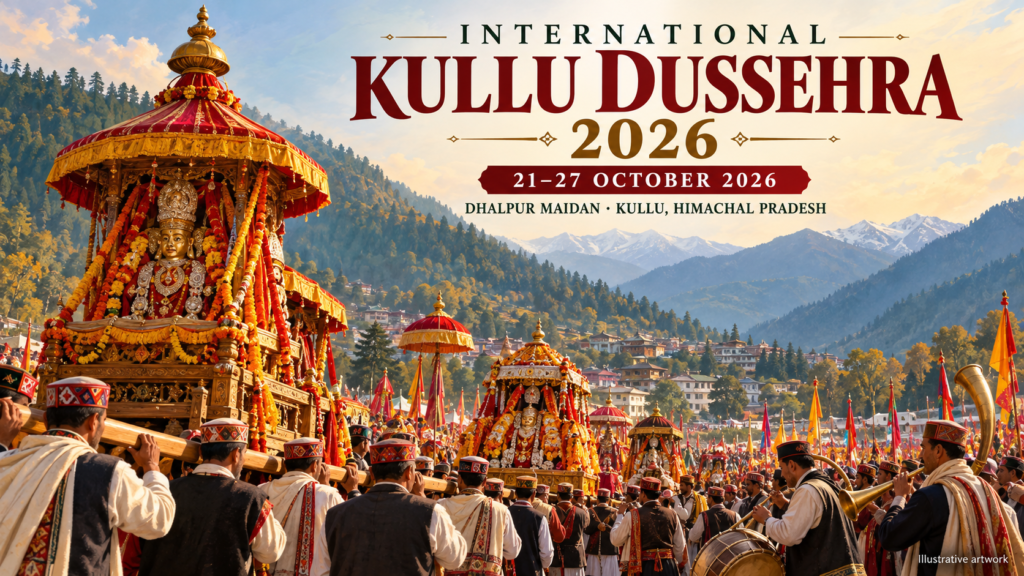
The 2026 edition of International Kullu Dussehra is scheduled to take place from 21 to 27 October 2026.
The main celebrations will be held at Dhalpur Maidan in Kullu town, the historic gathering place associated with the festival.
The dates have been confirmed by the Kullu District Administration in its announcement updated on 13 October 2026.
The district administration has highlighted several important elements of this year’s festival:
The historic Rath Yatra of Lord Raghunath.
A gathering of more than 250 hill deities.
Traditional Nati dances and Himachali cultural performances.
International cultural showcases.
The broader festive atmosphere around Dhalpur.
For first-time visitors, the opening Rath Yatra is one of the most meaningful ceremonies to prioritise.
Those who spend additional time in Kullu can explore the religious gathering, cultural programmes, local markets and the atmosphere of the festival beyond its opening procession.
The traditional concluding ceremonies also provide a different perspective on Kullu’s Dussehra traditions.
The 2026 preparations include international cultural programming, and local news coverage has reported participation by artists from multiple countries.
Festival organisers have also undertaken preparations for additional public attractions.
However, individual artist appearances, show timings, proposed light displays and other programme details should be checked against the final announcements. Preparatory notices do not guarantee that every proposed attraction will take place.
For the latest confirmed information, consult the Kullu District Administration’s official 2026 festival page.
Travel information last checked: 16 October 2026. Festival timings, traffic arrangements and access to individual programmes may change.
The religious ceremonies are the foundation of Kullu Dussehra, but the festival also brings the valley’s wider cultural traditions into public view.
Visitors encounter more than one kind of celebration.
There are ceremonial musicians accompanying deities, folk artists performing for audiences, stalls selling local products and families gathering to participate in the fair.
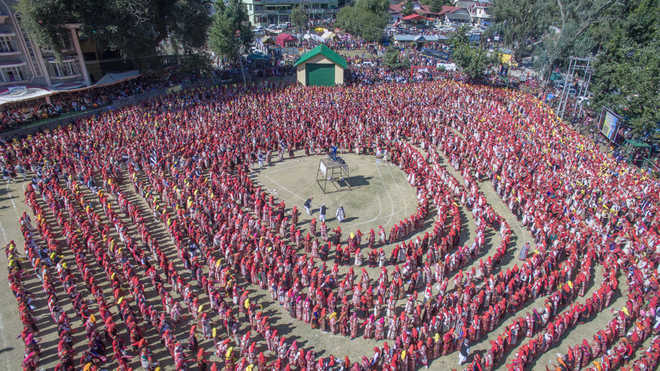
One of the most recognisable expressions of Himachali culture is Nati, a traditional folk-dance form performed in different regional styles.
The dancers’ coordinated movements, traditional clothing and accompanying music reflect a shared cultural heritage.
Kullu’s relationship with Nati extends beyond the festival stage.
In 2015, a mass Nati performance during International Kullu Dussehra involving 9,892 participants was recognised by Guinness World Records in the category of largest Nati dance, according to the official festival website.
This achievement helped draw wider attention to a tradition that already held deep cultural importance within the region.
Music also plays an essential role in the Devta traditions.
The sounds of drums, ceremonial horns and other folk instruments accompany processions, religious gatherings and the movements of deity palanquins.
These instruments are not simply background music.
Within their ceremonial setting, they contribute to the ritual environment and reflect musical traditions preserved by local communities.
Around Dhalpur, the public fair offers visitors another side of Kullu Dussehra.
Depending on the stalls and exhibitions operating that year, visitors may encounter Kullu shawls, woollen products, handicrafts, food vendors and displays featuring regional products.
It is worth taking time to explore these quieter details rather than moving only between the busiest festival attractions.
The people selling local products, the clothing worn by participating families and the interaction between visitors and residents all reveal something about Kullu beyond its mountain scenery.
The festival is an opportunity to encounter a living culture, not merely collect photographs of an annual event.
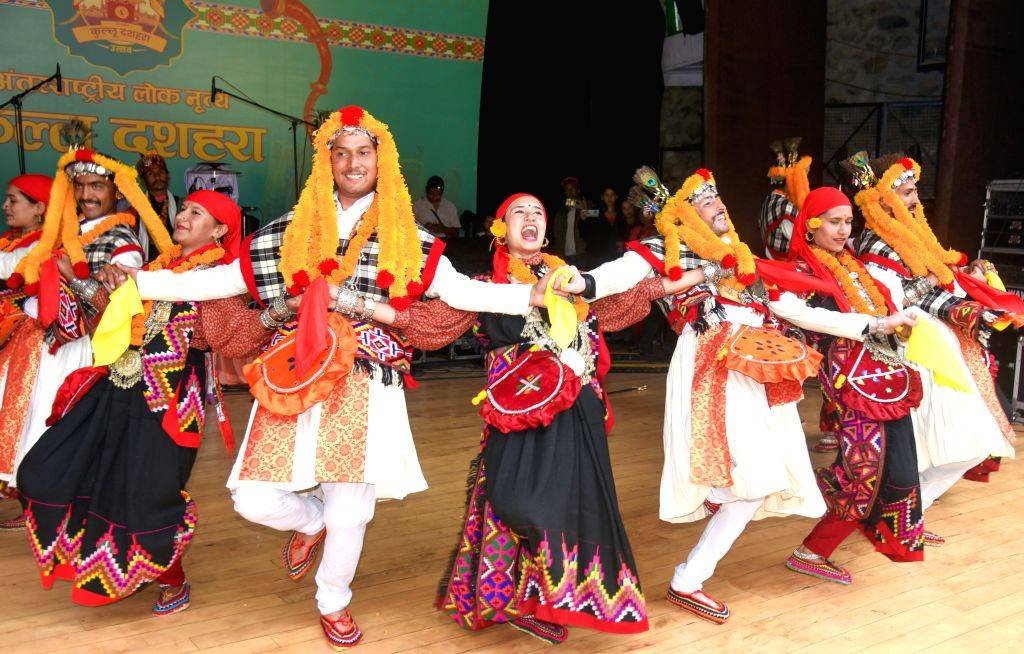
The festival is a wonderful opportunity to explore Kullu’s cultural heritage, but visiting during Dussehra requires more planning than an ordinary sightseeing trip.
Dhalpur lies within Kullu town, and the main festival attracts substantial local participation alongside visitors from other regions.
Allowing enough time for ceremonies, walking and changing traffic arrangements can make the experience much more enjoyable.
By road: Kullu is connected with Chandigarh, Delhi, Mandi and other important destinations through the regional highway network. Regular bus and taxi services connect the valley with neighbouring towns and larger transport hubs.
Travellers using public transport can check current services through Himachal Road Transport Corporation.
By air: The nearest airport is Kullu-Manali Airport at Bhuntar, approximately 10 km from Kullu town. Flight schedules and availability should be checked directly before making travel arrangements.
By train: Kullu does not have a direct broad-gauge railway connection. Travellers commonly continue by road from railway stations outside the valley, such as Chandigarh or Kiratpur Sahib.
For visitors whose main purpose is attending Dussehra, staying in or near Kullu town is generally the most convenient option.
Accommodation closer to the town can reduce dependence on longer journeys to Dhalpur, particularly when festival traffic is heavy.
Bhuntar and other nearby locations may provide alternatives, while Manali can be considered by travellers who also want to spend time sightseeing farther up the valley.
However, staying in Manali solely to attend the festival can mean additional road travel each day.
Accommodation should ideally be arranged in advance, especially when the visit overlaps with major ceremonies.
One day: Suitable for travellers already staying nearby who want to attend one important ceremony. Choose the day carefully and allow time for crowds.
Two to three days: A more balanced choice for first-time visitors, allowing time for the main religious gathering, cultural activities and relaxed exploration of Kullu town.
Four or more days: Better for travellers particularly interested in local culture, photography or combining the festival with a longer Himachal holiday.
There is no need to attend every day to appreciate the festival, but a longer visit provides more opportunities to understand its different aspects.
For a first-time visitor, the opening Rath Yatra is a strong choice because it introduces the relationship between Lord Raghunath, the former royal household and the assembled village deities.
The intervening days allow more time to observe the religious camps and cultural events.
The final day offers a different experience through the concluding Lanka Dahan traditions and the departure of the participating deities.
Check the final official timetable before choosing dates for any specific performance or ceremony.
October days in Kullu can be pleasant, while mornings and evenings may feel cooler. Carry comfortable walking shoes and an extra layer of clothing.
Keep drinking water and essential personal items with you, particularly if you plan to remain near the festival ground for several hours.
For families with children or older travellers, plan shorter viewing periods and identify convenient meeting points.
Expect temporary changes to parking, pedestrian movement and local traffic management. Follow the latest instructions issued by the district administration and police.
Most importantly, remember that the palanquins and religious processions are sacred to the participating communities. Do not block their movement, handle ceremonial objects or enter restricted areas for photographs.
Ask permission before taking close-up photographs of individuals or private religious moments.
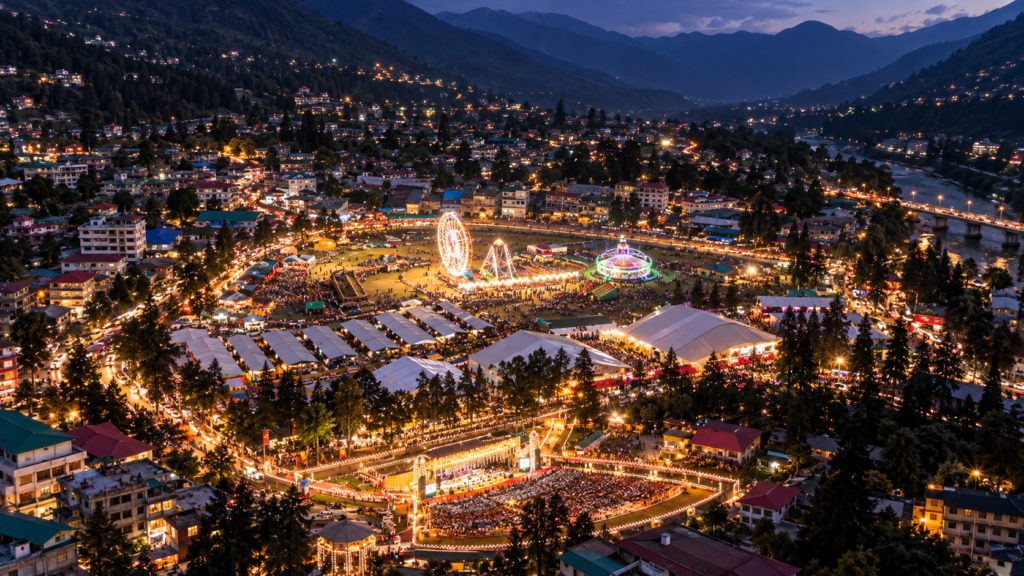
For travellers coming from outside Himachal Pradesh, Kullu Dussehra can also be an introduction to the region’s history, architecture and mountain communities.
Instead of rushing through a long list of sightseeing points, consider a few experiences that naturally complement the festival.
A visit to the Raghunath Temple area can help connect the festival’s public ceremonies with their historical setting.
Sultanpur’s association with the former Kullu royal household makes it especially relevant for travellers who have just learned the story of Raja Jagat Singh.
Respect temple visiting rules and any restrictions in force during festival ceremonies.
Naggar, a former capital of the Kullu kingdom, offers another perspective on the valley’s history.
Its historic buildings, temples and traditional architecture provide a quieter cultural experience beyond the activity of Dhalpur.
It is a worthwhile addition for travellers interested in heritage rather than an itinerary focused entirely on adventure activities.
Travellers with more time may also consider the sacred Bijli Mahadev Temple, known for its religious significance and hillside setting.
Because reaching the temple involves additional travel and walking arrangements, it should be planned separately rather than treated as a quick stop during the busiest festival hours.
You can explore our Bijli Mahadev Temple guide for further information.
The best approach is to allow Kullu Dussehra to remain the central experience and add nearby places according to your available time, interests and current local conditions.
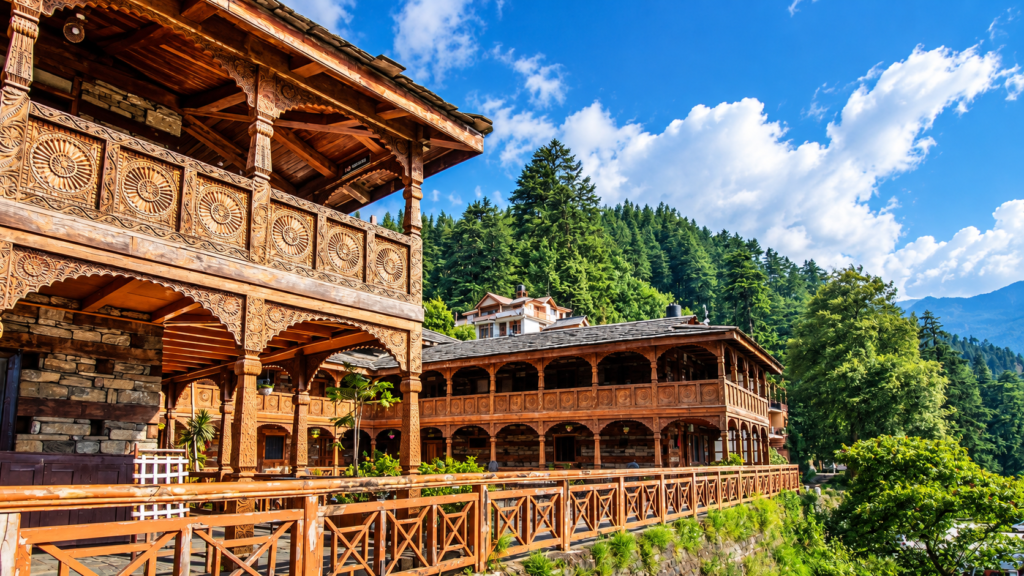
International Kullu Dussehra 2026 will take place from 21 to 27 October at Dhalpur Maidan in Kullu, Himachal Pradesh, according to the official district administration announcement.
The Kullu festival traditionally begins around Vijayadashami and continues for seven days. Its ceremonies are centred on Lord Raghunath’s Rath Yatra and the gathering of village deities, rather than a single-day Ravana-effigy burning.
According to the official festival website, Kullu Dussehra was declared an international festival in 1972. The celebrations have since provided a platform for international cultural participation alongside the valley’s traditional religious ceremonies.
The central Kullu Dussehra tradition does not involve the conventional burning of large Ravana effigies. Instead, its concluding ceremony includes Lanka Dahan, a symbolic ritual associated with the burning of Lanka.
The number varies between years. The Kullu District Administration’s 2026 announcement describes a gathering of more than 250 hill deities. This should not be treated as an exact final attendance count.
It is both, but its religious ceremonies are foundational. The gathering of deities and Lord Raghunath’s Rath Yatra form its spiritual centre, while music, traditional dances, exhibitions and other public events contribute to its wider cultural character.
Two or three days can provide a good introduction to the festival. Travellers deeply interested in the traditions or planning additional sightseeing may choose a longer stay.
Yes, families can attend, but large crowds, prolonged standing and changes in traffic arrangements should be considered. Plan suitable breaks and avoid assuming that all ceremonies will have convenient seating or easy access.
Yes. The festival attracts visitors interested in Himachal’s religious heritage and cultural traditions. International visitors should follow the same local etiquette as other travellers and check the applicable entry and travel requirements for India.
Kullu Dussehra is remarkable not simply because of its scale or international recognition, but because of the traditions it continues to preserve.
Its history reaches back to the former Kullu kingdom. Its ceremonies bring together communities from mountain villages, and its cultural programmes introduce those traditions to visitors from far beyond Himachal Pradesh.
The decorated palanquins, music, Rath Yatra and gathering at Dhalpur are expressions of a continuing relationship between faith, community and place.
For travellers, understanding this history makes the experience richer. Instead of seeing only a procession or a crowded fair, they begin to recognise the meaning carried by the people and ceremonies around them.
International Kullu Dussehra 2026, from 21 to 27 October, offers an opportunity to discover this living heritage in the heart of Kullu Valley.
If you are planning a visit to the festival or would like to combine Kullu’s cultural experiences with a personalised journey across Himachal Pradesh, Unexplored Himachal can help you plan a trip around your interests, travel dates and preferred pace.
Plan your Himachal journey with us on WhatsApp.
Explore Himachal beyond the usual.

Unexplored Himachal is a local tour operator based in the heart of Himachal Pradesh. Our passion for travel and deep-rooted love for our homeland drive us to introduce travelers to the hidden valleys, quaint villages, and untouched landscapes that often go unnoticed.
Book Now 5 Nights, 6 Days Location: Kullu & Manali
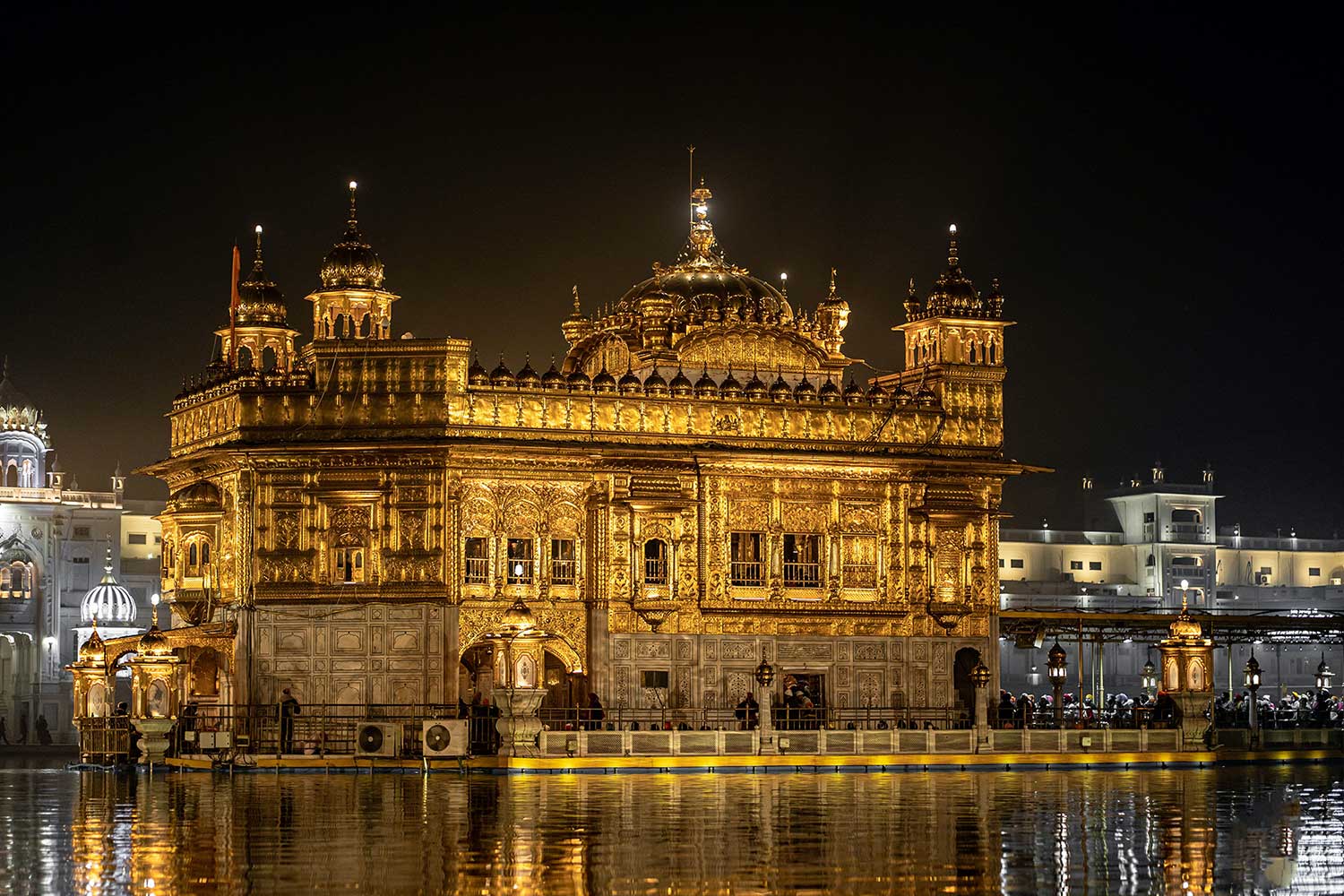
Book Now 6 Nights, 7 Days Location: Himachal & Amritsar
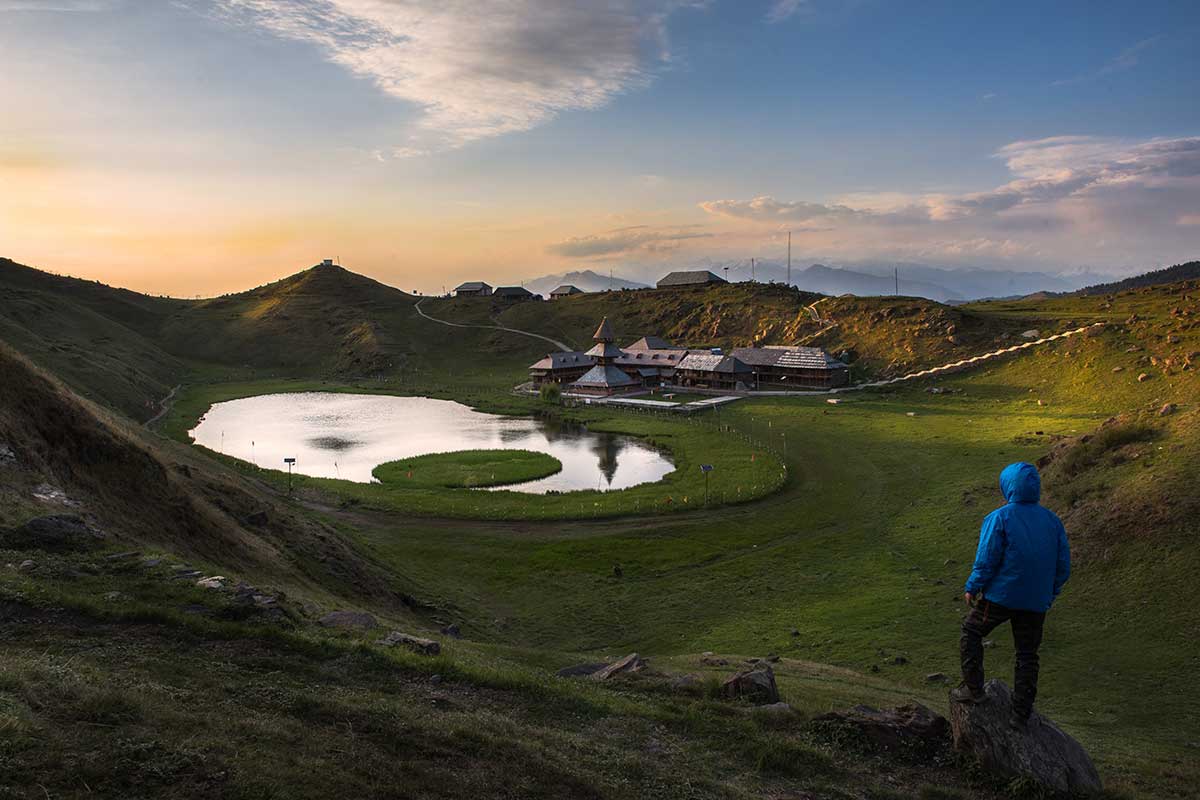
Book Now 10 Nights, 11 Days Location: Himachal Per Pax
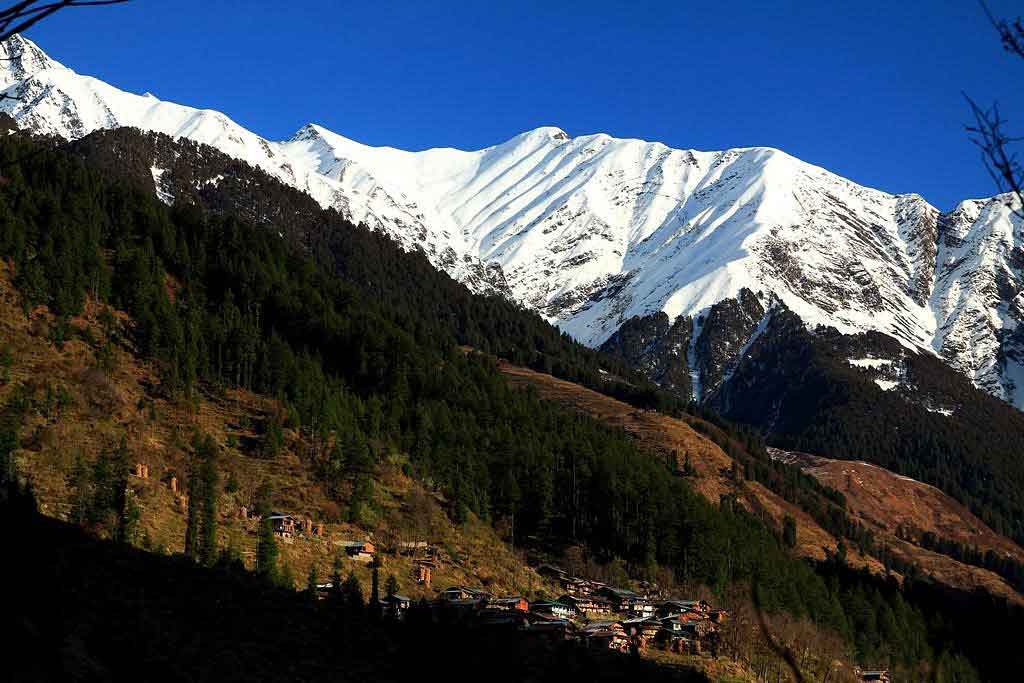
Book Now 3 Nights, 4 Days Location: Kullu Per Person

Book Now 8 Nights, 9 Days Location: Spiti Per Person
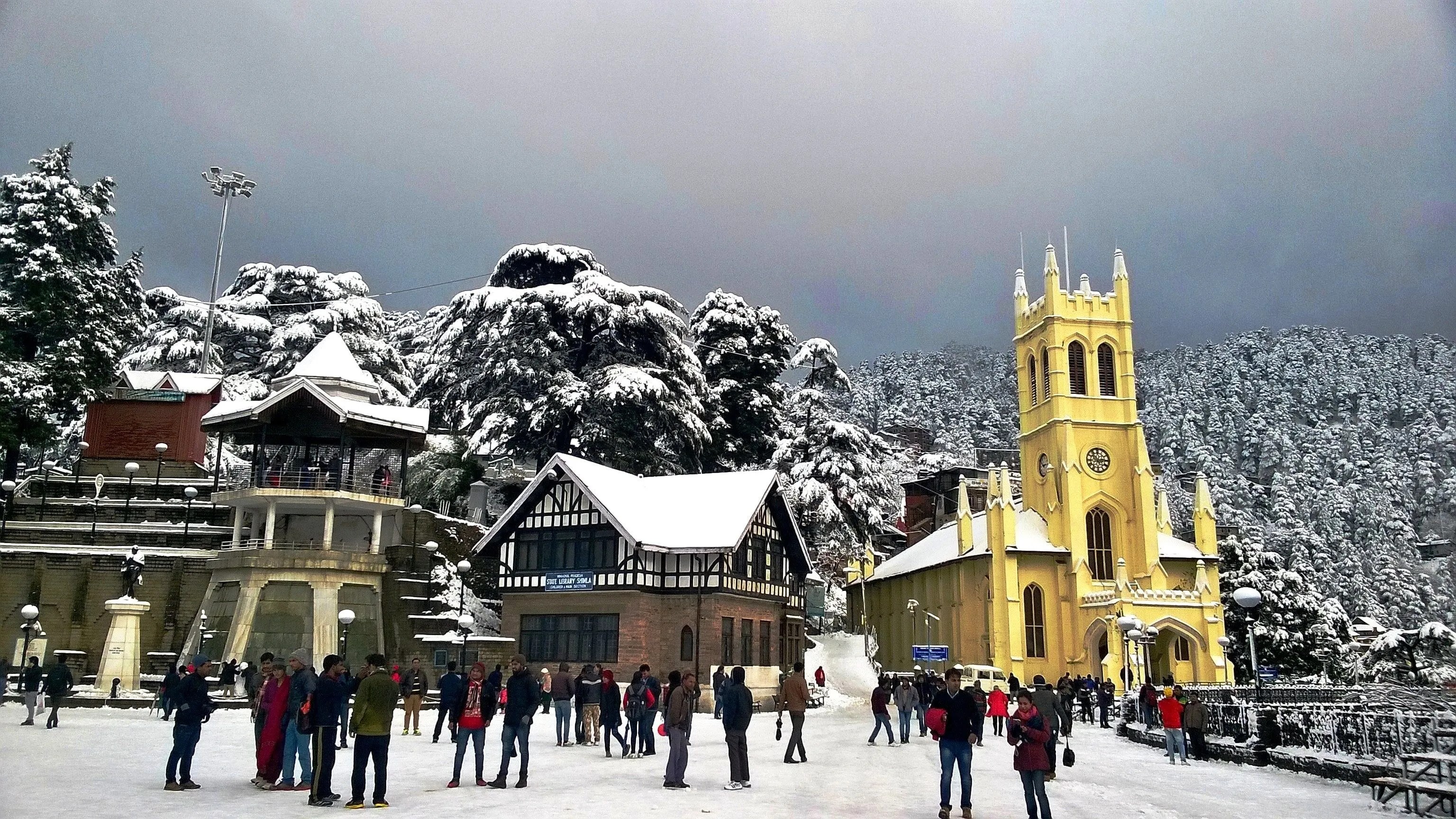
Book Now 5 Nights, 6 Days Location: Shimla Per Person

Spiti Valley Bike Expedition by Unexplored Himachal is a 9 Nights / 10 Days journey through the stunning high-altitude landscapes of north-eastern Himachal Pradesh.
Book Now 11 Days Location: Spiti, Himachal Pradesh Group size:
Discover the hidden paradise of Himachal Pradesh with our Pangi Valley Tour Package. This 7 Nights / 8 Days adventure trip takes you through Chamba, Sach Pass, Killar, Sural Bhatori, Udaipur, Keylong and Manali.
Book Now 10 Nights,11 Days Max. People : 15 Min.
Book Now 4 Nights, 5 Days Max. People : 15
Book Now 4 Nights, 5 Days Max. People : 15

Book Now 9 Nights, 10 Days Location: Leh & Ladakh

Book Now 9 Nights, 10 Days Location: Himachal Price On

Book Now 8 Nights, 9 Days Location: Spiti Price On
Book Now 5 Nights, 6 Days Location: Manali Price On

Book Now 9 Nights, 10 Days Location: Manali Price On
WhatsApp us